Murder of Robert Peace
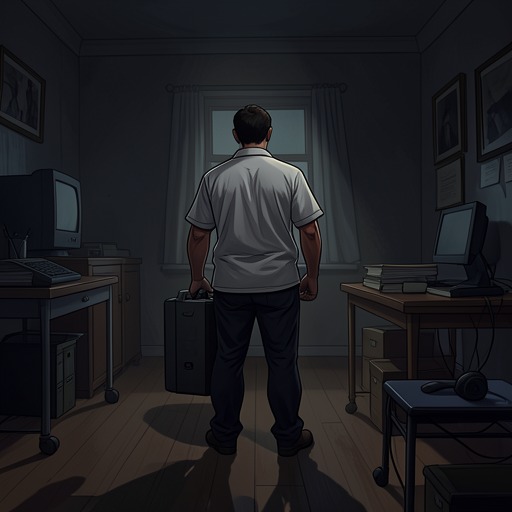
The Short and Tragic Life of Robert PeaceMurder of Robert Peace is the decisive rupture in the life of Robert Peace, bringing together the ambitions, loyalties, inherited burdens, and dangerous economies that had shaped his movement between Newark, elite institutions, and the underground. In 2011, during a home invasion at 34 Smith Street, Rob is shot twice and dies in the basement. The circumstances remain partly unknowable: the people closest to him can reconstruct the violence only imperfectly, while the police find no suspect, fingerprints, or other evidence. His death therefore functions not as the consequence of one isolated choice but as the point where several long-running trajectories—education, imprisonment, precarious labor, drug dealing, friendship, and urban violence—collide.
The Setting and Immediate Crisis
On the day of the funeral, Rob’s friends hold a private ceremony in the backyard of the house, only a few yards from where he died. Police are still moving in and out, though the intensity of the search has diminished, and the house remains marked by the labor of cleaning up after the investigation. Curtis has been released after three nights in a cell, but charges against him appear imminent. Even so, the men continue to live in the house, eating and sleeping there and sharing a mournful blunt as they try to inhabit a space suddenly emptied of Rob’s broad shoulders and familiar voice. Christopher rides the bicycle Rob gave him years earlier around the driveway; it is now the perfect size for him, an ordinary object made unbearable by its connection to the dead.
The group cannot avoid returning to the night itself. They do not know whether the intruders arrived intending to kill Rob. A teenage neighbor saw the men leave and described the second intruder as small, light-skinned, and wearing dreadlocks, but the account supplies no definitive identification. The friends believe the shots were fired while Curtis was running upstairs from a large man who had been firing at him. During that failed intervention, the second intruder may have turned toward Rob, and Rob may have moved against him, perhaps believing that his recent martial-arts training gave him a better chance than most of gaining the upper hand. The reconstruction remains speculation; the uncertainty is part of the event’s permanent wound.
The Shooting and Its Physical Reality
What Curtis does know is that Rob’s presence may have changed the outcome for everyone else in the house. If Rob had not been shot, the intruders might not have fled so quickly, and Curtis would most likely have been killed as well, or killed in addition to Rob. Tavarus, Darlene, and Christopher were also vulnerable. The Burger Boyz therefore tell themselves that Rob saved their lives, a consoling interpretation that gives purpose to an otherwise senseless death without resolving the unanswered questions surrounding it.
The medical examiner’s findings make the violence precise. Two .18 caliber bullets entered Rob’s torso. The first struck his abdomen and lacerated his liver. The second hit him squarely in the chest, pierced a coronary artery, and lodged in the back of his rib cage. Blood began filling his chest cavity, producing a painful buildup of pressure. He was probably conscious for roughly ninety seconds, but the fall in blood pressure would have rapidly clouded his mind. The account stresses that he suffered severely before dying, yet no cry or groan followed the shots. Curtis heard silence. That silence permits the possibility that Rob was trying, even in the final moments, to keep his friends from coming down into the basement and placing themselves in greater danger, though the narrative cannot establish what he was thinking.
Curtis remains fixed on the moment four nights earlier when he held and cradled Rob’s lifeless body. He avoids alcohol and drugs in case the police return, but abstention cannot free him from that scene. The physical facts of the shooting and the friends’ uncertain reconstruction occupy different registers: one records wounds, blood, and elapsed time; the other preserves a community’s effort to make meaning from a death no one fully witnessed.
The Unfinished Investigation
The official aftermath offers no resolution equal to the violence. Investigators searched the neighborhood but found no suspects, fingerprints, or other usable evidence, and the crucial forty-eight-hour period in which most violent crimes are solved passed without a breakthrough. The likely killers were thought to have left town temporarily, leaving police to hope that one might later be arrested for a traffic violation or a drug offense in Philadelphia, Baltimore, or another troubled urban area. The contrast with the 1987 murders of Charlene and Estella Moore is stark: in that case, police found a gun, an address, and a suspect carrying the murder weapon within twenty-eight hours; in Rob’s case, they found nothing. The difference makes his death appear not only unsolved but institutionally abandoned, another instance in which the investigative resources available to a Black victim from Newark proved sharply unequal to the urgency of the loss.
The Death’s Wider Trajectory
The shooting cannot be separated from the institutional and personal paths that preceded it. Rob had learned to move through systems that promised protection while imposing their own forms of confinement. At St. Benedict’s Preparatory School for Boys, Summer Phase kept incoming students occupied with academic work, sports, songs, color groups, and shared sleeping arrangements; the school’s stated discipline was also an effort to prevent fighting, theft, drug use, emotional abuse, and dropping out. At Yale, by contrast, drug possession and distribution were explicitly listed among offenses punishable by expulsion, and Rob entered the Pierson College master’s office believing that his own disciplinary proceeding could become a form of arraignment. The two institutions differed in purpose and scale, but both organized his time and behavior through rules backed by severe consequences.
His father’s imprisonment supplied the most enduring framework for how Rob understood institutions and accusation. After Skeet Douglas was transferred to Trenton State Prison in January 1991, Rob and Jackie Peace continued visiting him through a landscape dominated by the prison’s twenty-foot walls, fortified towers, barred buildings, and nearly nineteen hundred inmates. Jackie eventually allowed Rob to see his father alone, while she waited outside and avoided discussing the visit during the drive home. Rob believed firmly that his father had been falsely accused, framed by police, and wrongfully convicted, and he devoted himself to the appeals that Skeet continued to pursue. Years later, Rob spoke for four hours at the Elihu house about the trial, the prison visits, the successful appeal and its reversal, and his theory that the murder weapon had been stolen from Skeet’s apartment and planted by police. That account did not merely explain a family history; it established the distrust of official explanations that would shadow Rob’s own life.
The resources that might have redirected his trajectory were real but never absolute. Charles Cawley offered Rob a blank personal check to cover his college expenses, an extraordinary form of sponsorship that Friar Edwin Leahy told him he had a responsibility to accept and earn. Rob nevertheless remained attentive to the social distance between elite education and the people he called “real people,” meaning those who struggled as he and his family did. After leaving St. Benedict’s Preparatory School, he worked at an airport carrying luggage, fitting into a demanding crew through strength, silence, and stamina while reading alone during breaks. When supervisors demanded that he submit to a drug test after an accident, he refused the test and then declined the first appeal available under the airline union’s contract; after being reprimanded by supervisors on the tarmac and in administrative offices, he was fired. The job’s loss narrowed the space between his educated identity and the underground economy that had continued to attract him.
That economy eventually became physically concentrated in the basement of 34 Smith Street. Rob acquired fifty pounds of marijuana at a discounted price after the supplier’s neighborhood had become dangerous and planned to convert it into Sour Diesel, expecting profits approaching half a million dollars. The process required ten to fifteen hours for every pound, more than five hundred hours in total, while he continued processing smaller quantities for Amin. Because the equipment had to remain small enough to keep butane fumes from reaching Christopher upstairs, Rob worked pound by pound in an insulated basement, wearing a gas mask and imagining the money as a passage toward freedom and a real-estate future. The work transformed the basement from an old retreat of the Burger Boyz into a sealed, hazardous workplace, and it brought the risks of the drug trade into the same household where friends and family remained exposed.
By the time Kamar’s betrayal threatened the operation, Rob’s usual calm had broken. Curtis urged him to abandon the confrontation, while Rob looked to Tavarus and to the real-estate plans they had built through charts and graphs. He asked for three days, insisting that Kamar would not act during that interval. The request revealed how financial ambition, loyalty, and violent calculation had become entangled: the property scheme represented a lawful future, but protecting the drug operation required Rob to reason in the language of retaliation and threat. The Newark Star-Ledger reported that the city had experienced its first murder-free calendar month in more than forty years in March 2010, followed by a 71 percent increase in violent crime during the first quarter of 2011. Rob’s death occurred within that reversal, where apparent civic improvement and renewed violence existed side by side.
The aftermath continues the collision rather than resolving it. Raquel used Facebook to raise money for Jackie’s funeral expenses and collected $5,000, though many former classmates, including people who had bought marijuana from Rob at Yale, failed to respond or refused to contribute because of the circumstances of his death. Curtis, still entangled in legal proceedings related to the basement’s commerce, tried unsuccessfully to recruit private pursuers to avenge Rob. Tavarus, who had been incapacitated enough to close his restaurant and take a telemarketing job, persuaded him to stop, arguing that violence would not solve violence. Flowy marked the bond with a tattoo reading “Real Peace Never Die BB4Life,” while the surviving friends tried to repair their broken relationship with Jackie. Neither justice for the killers nor a return to the intimacy they once shared had occurred by the time of publication, leaving the murder suspended between an unsolved crime and an irreversible social fracture.